News

Szingapúr új űrügynöksége bővíti együttműködéseit

Szingapúr új űrügynöksége, az NSAS együttműködési megállapodást írt alá a japán JAXA-val az ország űriparának fejlesztése érdekében. A partnerség a műholdtechnológiára, az űrtudományra, az alkalmazásokra és az ipari együttműködésre fókuszál. Szingapúr űripara jelenleg mintegy 70 vállalatból és 2 000 szakemberből áll, amelyet a következő években tovább kívánnak erősíteni.

Europe’s next security challenge is in orbit

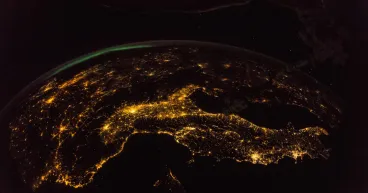
Across the European Union, satellite navigations alone is thought to underpin more than 10% of GDP. Satellite-dependent activity on the whole is responsible for much more.

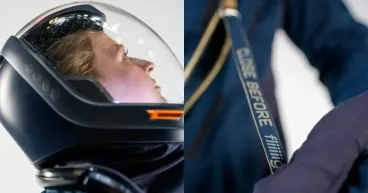
ESA Astronaut Tests European Spacesuit Prototype Aboard ISS

ESA astronaut Sophie Adenot has tested a European intravehicular activity (IVA) spacesuit prototype aboard the International Space Station (ISS). In addition to testing in space, a second prototype has undergone a water survival test campaign in Marseille.

ESA Greenlights Two Budget-Friendly Earth Observation Missions

The European Space Agency has greenlit its HiBiDiS and SOVA-S Scout missions, with development led by SITAEL and OHB Czechspace, respectively. These missions are required to progress from initial approval to launch within three years, with costs capped at €35 million.

Germany pushes European military space command initiative

A senior German military official said Europe needs a coordinated approach to military space operations and proposed the creation of a European Space Component Command hosted by Germany and open to allied participation.

Smile lifts off on quest to reveal Earth’s invisible shield against the solar wind

The Smile spacecraft lifted off on a Vega-C rocket from Europe’s Spaceport in French Guiana at 04:52 BST / 05:52 CEST (00:52 local time) on 19 May 2026. The launch marks the beginning of an ambitious mission to better understand solar storms, geomagnetic storms, and the science of space weather.
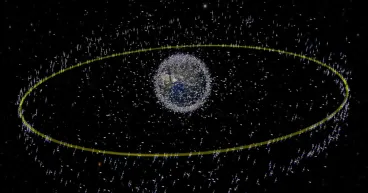
Britain must join efforts to boost European space capabilities if it is to lead Nato in the High North

That Nato operations in the High North (the Arctic, North Atlantic and northern Europe) are to be led by a British, rather than American, military commander is a welcome step that aligns with the government’s “Nato First” approach.

ESA Begins Developing Replacements for NASA’s Contributions to LISA

The European Space Agency has begun mitigation efforts for key elements of its LISA mission after a White House budget proposal sought, for the second year running, to eliminate most of NASA’s planned support.

Neuberger Space Fund Turns to Europe as SpaceX Hype Buoys Sector

Evelyn Chow’s space-focused stock fund is scouring Europe for bargains just as the looming debut of SpaceX supercharges valuations in the US.

The Digital Networks Act: a reform that requires strategic attention for satellite operators

Satellite operators seeking EU market access may face a fundamental shift in how spectrum is authorized, how services are delivered across borders, and what operational obligations apply.

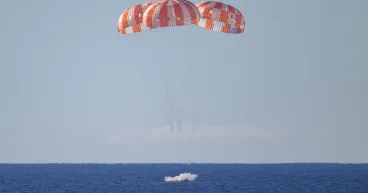
Artemis II: splashdown

At 17:07 local time on 10 April (01:07 BST/02:07 CEST 11 April), NASA’s Orion spacecraft and its crew splashed down safely in the Pacific Ocean, marking the end of the Artemis II mission. ESA’s European Service Module powered this historic mission that took four astronauts around the Moon and back for the first time since Apollo 17 in 1972.