News

New companies put forward for major investments under the EIC STEP Scale Up scheme

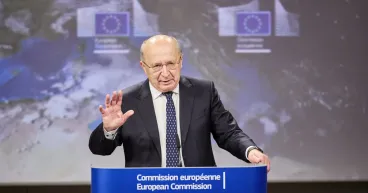
The Commission announced the second group of companies that have successfully passed the evaluation phase of the EIC Strategic Technologies for Europe Platform (STEP) Scale Up call. Together receiving up to a total of €90 million of equity investments, they will now go forward to the EIC Fund for investment decisions, subject to due diligence.

Czechia in high-stakes bid for EU “AI Gigafactory”

PRAGUE – Czechia is pursuing the establishment of one of the EU’s "AI gigafactories" - massive computing centres designed to supercharge Europe's artificial intelligence capabilities and close the gap with global leaders like the United States.

The global impact of Trump vs. Musk

Musk’s satellite internet company is in 130 countries, thanks in part to White House support. If he’s on the outs, then what?

The Nuclear Option: Europe's Plan for Faster Space Travel.

Whilst NASA funding has been slashed by the Trump administration with no allocation for Nuclear Thermal Propulsion or and Nuclear Electric Propulsion, scientists at the European Space Agency (ESA) have been studying nuclear propulsion. Here's how it works: Instead of burning fuel with oxygen, a nuclear reactor heats up a propellant like hydrogen. The super-heated propellant then shoots out of the rocket nozzle, pushing the spacecraft forward. This method is much more efficient than chemical rockets.

How the EU plans to rule space, before others do

For decades, Europe’s space ambitions were overshadowed by those of NASA’s lunar missions, the Russians’ rockets, or even China’s orbital aspirations. The EU, despite its technological might and scientific pedigree, had no central law governing space activities, just a few national rules, some voluntary guidelines, and polite agreements. However, that’s now changing.

Shukla's ISS flight set to mark liftoff for India's space industry

“I carry not just technical equipment but the hopes and dreams of 1.7 billion Indians.” -Shubhanshu Shukla, poised to become the first Indian astronaut to reach the International Space Station, has stirred a wave of national pride. His mission marks a return to government-sponsored human spaceflight for India after a hiatus of more than four decades — and a bold step into the country’s spacefaring future.

NASA Sets Coverage for Axiom Mission 4 Launch, Arrival at Station

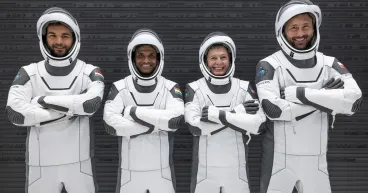
NASA, Axiom Space, and SpaceX are targeting 8:22 a.m. EDT, Tuesday, June 10, for launch of the fourth private astronaut mission to the International Space Station, Axiom Mission 4. The mission will lift off from Launch Complex 39A at NASA’s Kennedy Space Center in Florida. The crew will travel to the orbiting laboratory on a new SpaceX Dragon spacecraft after launching on the company’s Falcon 9 rocket. The targeted docking time is approximately 12:30 p.m., Wednesday, June 11.

Some parts of Trump’s proposed budget for NASA are literally draconian

New details of the Trump administration's plans for NASA, released Friday, revealed the White House's desire to end the development of an experimental nuclear thermal rocket engine that could have shown a new way of exploring the Solar System.

ESA’s new asteroid hunter opens its eye to the sky

The European Space Agency’s (ESA) newest planetary defender has opened its ‘eye’ to the cosmos for the first time. The Flyeye telescope’s ‘first light’ marks the beginning of a new chapter in how we scan the skies for new near-Earth asteroids and comets.

Orange and Telekom back European space partnerships

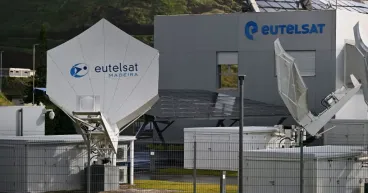
Eutelsat and Orange have reinforced their partnership with new multi-year low Earth orbit (LEO) agreement, leveraging Eutelsat’s OneWeb constellation. The deal follows a similar deal March, where Orange and Canada’s Telesat signed a multi-year partnership for Telesat Lightspeed LEO satellite connectivity and terrestrial infrastructure. Both announcements form a not-too-subtle message that Europe’s largest operators are not going to sit around and rely on US constellations, Starlink and Kuiper.

Five highlights from EU Space Days 2025

EU Space Days 2025 brought the European space community to Gdańsk for two packed days of discussion and inspiration. Organised by the European Commission under the auspices of the Polish Presidency of the Council of the EU, and held alongside InfoShare, the region’s largest startup and tech conference, the event featured a rich mix of sessions, the most ambitious EU Space Days exhibition to date.

Europe’s far-reaching Space Act nears launch

Europe is expected to publish a draft law by the end of June to overhaul the regulation of space services, introducing unified rules for companies operating in or selling to the European market.