Apply for EUSPA’s Proof-of-Concept project with a leading pharmaceutical company – This innovative project aims to leverage Copernicus data to support Chronic Obstructive Pulmonary Disease (COPD) risk mapping. Read the Terms of Reference, use the Proposal Template, and apply by 10 April. For questions, contact @email.
Fishing is vital for global food security but faces major challenges such as illegal fishing, overfishing, pollution, climate change, and weak traceability. New regulations will digitalise the sector, generating large volumes of vessel data that, when combined with space technologies, can improve monitoring, sustainability, enforcement, and safety.
The call seeks teams developing commercially viable space-based solutions (using SatEO, SatNav, SatCom, etc.) to address these challenges, offering zero-equity funding, technical support, and ESA network access.
The ESA BIC Hungary 2026 Spring application period is now open!
Organised by:
ESA - BIC
Do you have a space-related idea — or a space-technology solution addressing real-world challenges on Earth?
At ESA BIC Hungary, we support you in building a startup from idea to market with up to €60,000 in non-dilutive funding, expert mentoring, and access to ESA’s international network.
🔹 technical, business & legal support 🔹 investor connections 🔹 co-working space & global visibility 🔹 the strength of the ESA brand
Get expert mentoring and financial support from the FIERCE Project
The EU-funded FIERCE project is mobilizing €2.5M to accelerate the adoption of green space solutions by European SMEs. Take advantage of their advisory services and grants of up to €50,000.
Application is now open for the 7th batch of EU’s leading acceleration programme designed to supercharge the commercial growth of space startups and scaleups. Get €75,000 in equity-free funding, expert support in sales and international expansion, and direct acces to top-tier growth investors. Join the upcoming Business Accelerator webinar and apply by 6 March.
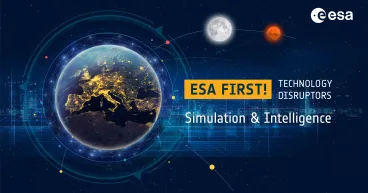
FIRST! Simulation and Intelligence Invitation to Tender
Organised by:
ESA
FIRST! has announced an Invitation to Tender (ITT) that aims to de-risk disruptive technologies related to simulation intelligence for future space transportation in Europe, with a high commercial interest. The objective is to reach TRL 4-5 by software verification in a relevant environment such as breadboard testing.
FIRST! is an initiative with ESA’s programme for future space transportation, FLPP. Its goals are to identify innovative and promising technology disruptors benefitting future European space transportation and to accelerate their derisking through rapid prototyping and testing.
climate adaptation and environmental footprint reduction,
green financing and insurance services, and
the creation of liveable, sustainable cities.
Innovative space-based applications enhancing capabilities for a resilient Europe
The Innovative space-based applications enhancing capabilities for a resilient Europe (HORIZON-EUSPA-2026-SPACE-02-52) topicaims to support the development of innovative applications that leverage Galileo, EGNOS and other EU Space Programme components, in particular Copernicus and/or GOVSATCOM, to strengthen Europe’s resilience through enhanced disaster risk management, efficient emergency response, critical infrastructure protection and secure, integrated crisis operations.
climate adaptation and environmental footprint reduction,
green financing and insurance services, and
the creation of liveable, sustainable cities.
Innovative space-based applications enhancing capabilities for a resilient Europe
The Innovative space-based applications enhancing capabilities for a resilient Europe (HORIZON-EUSPA-2026-SPACE-02-52) topicaims to support the development of innovative applications that leverage Galileo, EGNOS and other EU Space Programme components, in particular Copernicus and/or GOVSATCOM, to strengthen Europe’s resilience through enhanced disaster risk management, efficient emergency response, critical infrastructure protection and secure, integrated crisis operations.